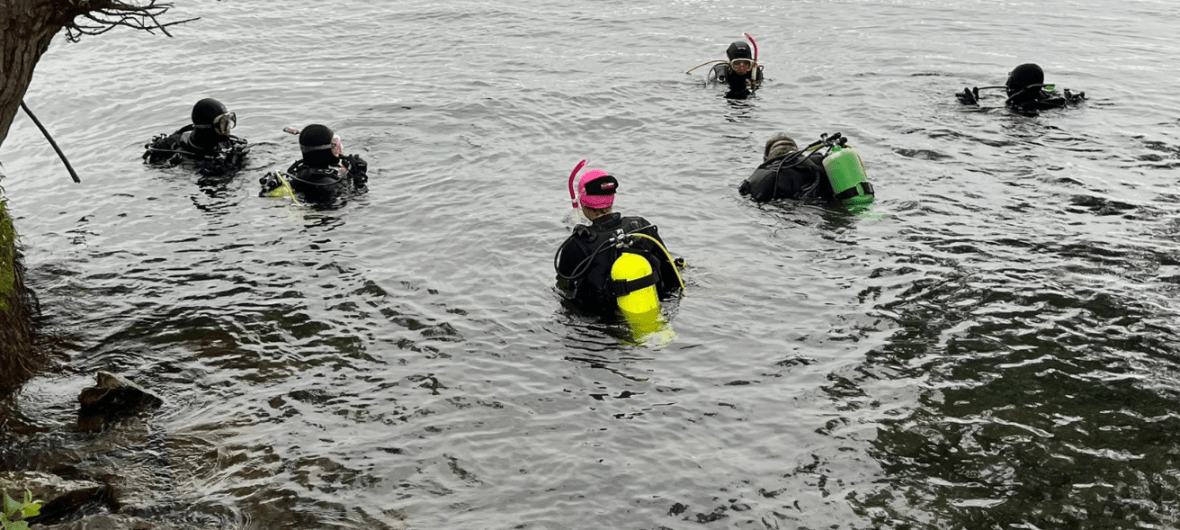
Type of dive: Skin diving shore dive and/or scuba diving shore dive. This was an exploratory trip to search for potential new-to-us dive sites for the club.
Location: In the Brockville area.
Potential Shipwrecks:
Wee Hawk
Depth: 15-20 ft.
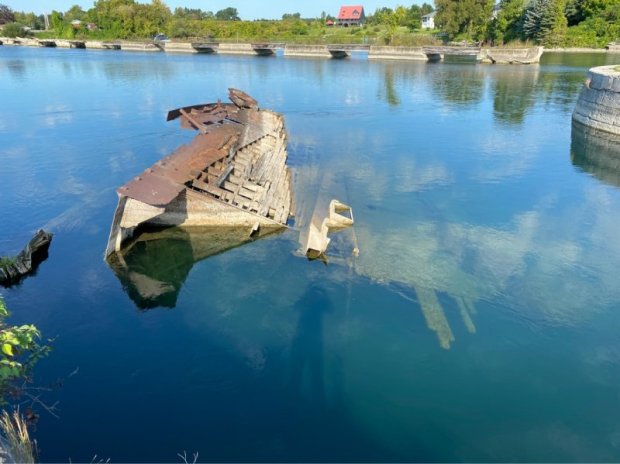
- The Wee Hawk’s story begins in 1926 when Electric Ferries Incorporated had naval architect, Eads Johnson, design an innovative diesel electric automobile ferry.
- In 1961, the Wee Hawk was moved to Lock 27 near Cardinal Ontario by a local welder, Percy Larose who operated a local scrap yard. He began scrapping two ferries, the Wee Hawk and the Walsh, at the old Cardinal Lock, beginning with the Walsh. However, shortly afterwards he was severely injured. He never recovered to return to work; therefore, the two ferries were abandoned to gradually sink to the bottom.
- More information at: https://saveontarioshipwrecks.ca/wp-content/uploads/2018/03/TheWreckOfTheWeehawk.pdf
Conestoga
Depth: 30 ft.
Built: 1878.
Sunk: May 22, 1922.
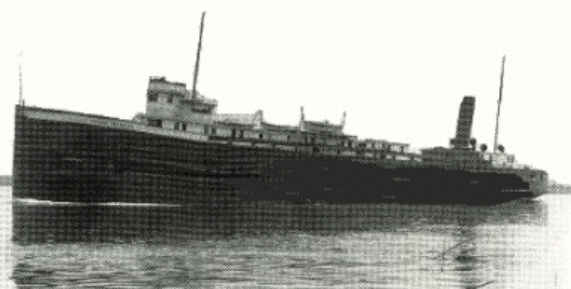
- The Conestoga, a wooden passenger / package steam freighter was traversing the locks in 1922, just upstream when she caught fire. Afraid that it would burn the locks, she was “flushed” out of the lock, and drifted to where she sits today.
- Known as the “Connie“, she is 253′ in length, and sits in only 30 feet.
- Even though she burned to the water line, there are many artifacts to explore. Her expansion engine is one of the highlights, you could almost see how the engine functioned.
- Looking at her stern her massive four blade propeller has been the site of many photo opportunities.
- The rudder and steering mechanism lie in the clay base downstream from the stern.
- Dropping inside her hull, the current is much easier to navigate. There you will find lots of things to look at.
- Just ahead of the engine you will cross over her massive boilers.
- Winches, deck fittings, even a “donkey engine” (a small steam winch used to pull in ropes) sits under some of the iron work that scatters around the wreck.
- As you enter the bow you will see her large windlass and huge links of chain.
- Many who visit the Connie, will then climb over her side and enjoy the drift back to her stern. This time explore the other side of the inner hull.
- At one time she was outfitted with steel plates to help support her hull. Many pieces of rusty plates have fallen off, so exercise caution not to get caught or cut from the remaining plates and large nails along her top and sides.
- This site is usually perfect for less experienced divers due to it’s mild current and shallow depth.
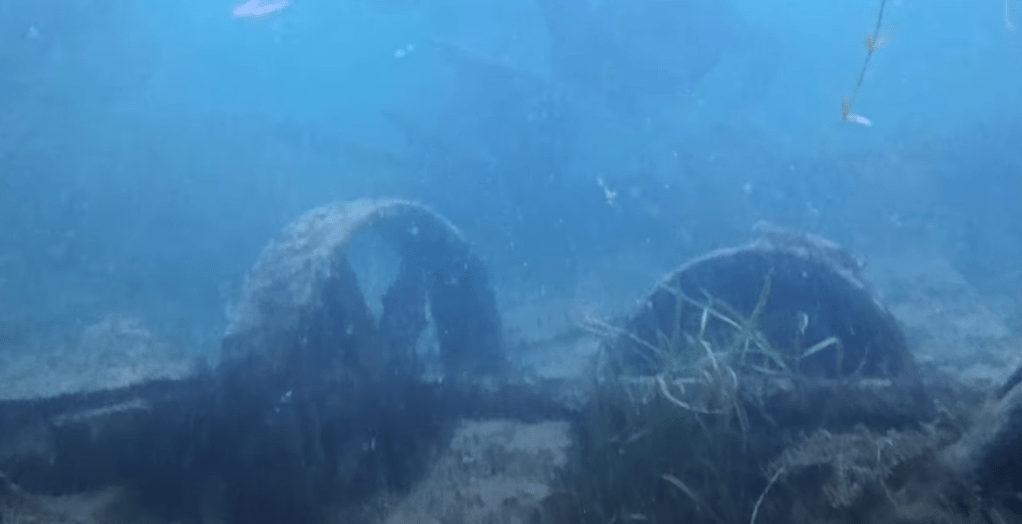
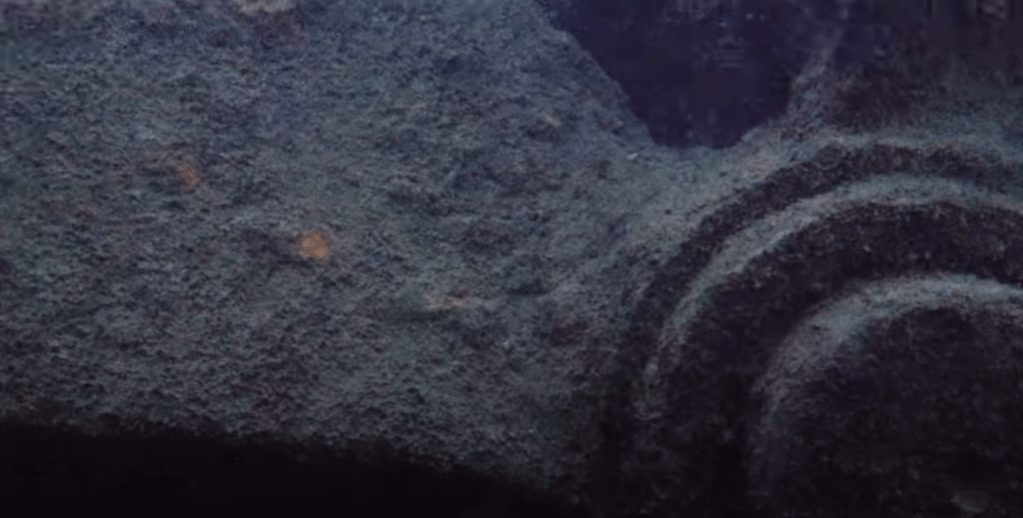
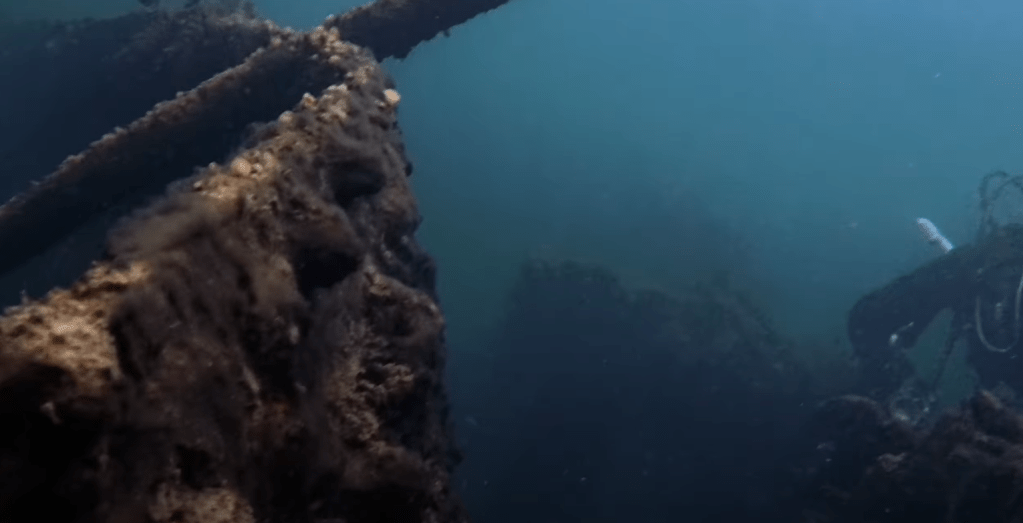
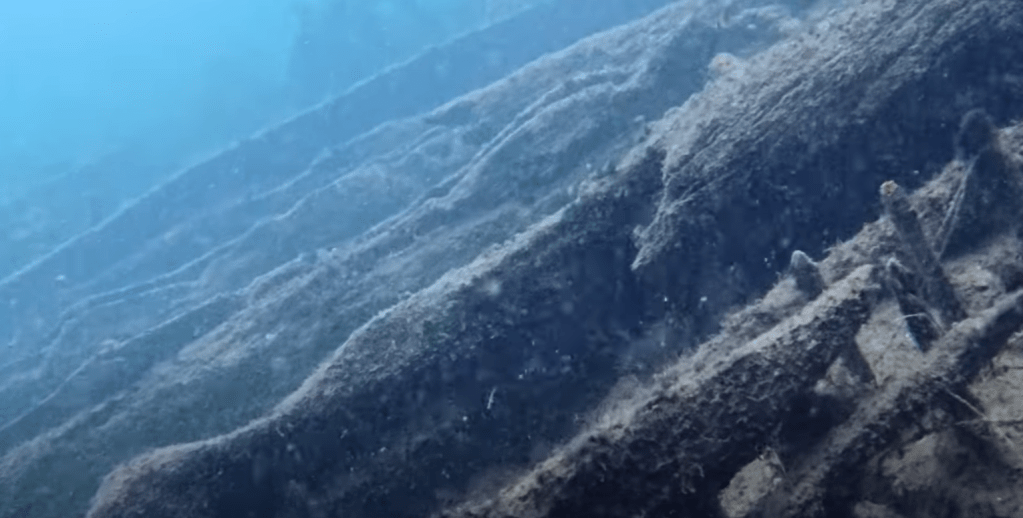
photo credit: Ali Kokulu
Rothesay
Steamer Paddlewheeler
Built 1867
Sunk 1889
Length 193 ft.
Depths to 30 ft.
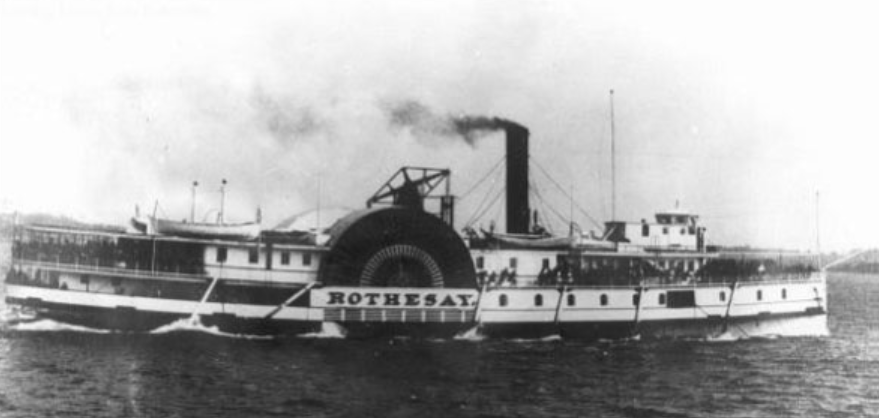
- The Rothesay is a 19th century wooden twin side wheeler (193′ x 28.8′ x 7.9′)
- The Rothesay was built in Saint John, NB in 1867.
- She was launched in St. John on Feb. 2, 1868.
- Initially she sailed between Fredericton and St. John, but was later relocated to serve on the St. Lawrence River on the Montreal to Prescott run.
- Referred to as the “Greyhound of the St. Lawrence”, she was carrying passengers on Sept. 12, 1889, when she collided with the American tugboat Myra and sank at her present resting place in the waters off Prescott. Two crewmen on the tug were killed.
- In 1901 a group from the Royal Military College, Kingston used this wreck for explosives practice which flattened her midsection, though her stern and bow remain relatively intact.
- Photogrammetry: https://3dshipwrecks.org/shipwreck-rothesay/
- More information at:
https://augusta.ca/recreation-facilities/the-rothesay-1867-1889/


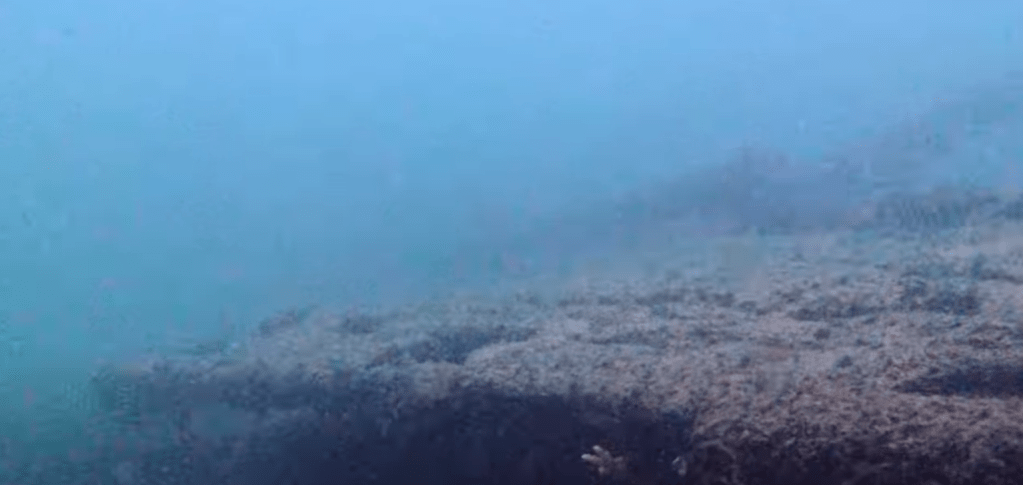
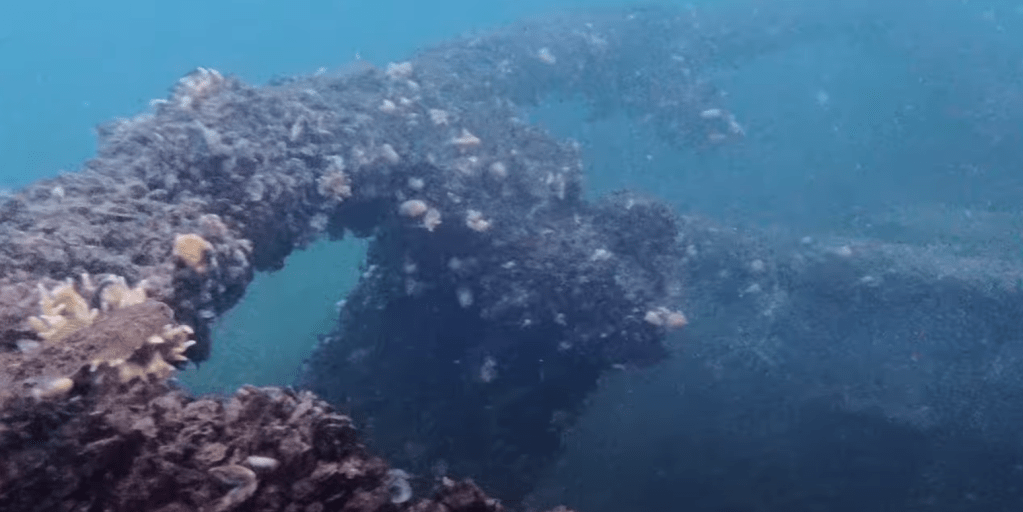
photo credit: Ali Kokulu
 Blue North Scuba Club